
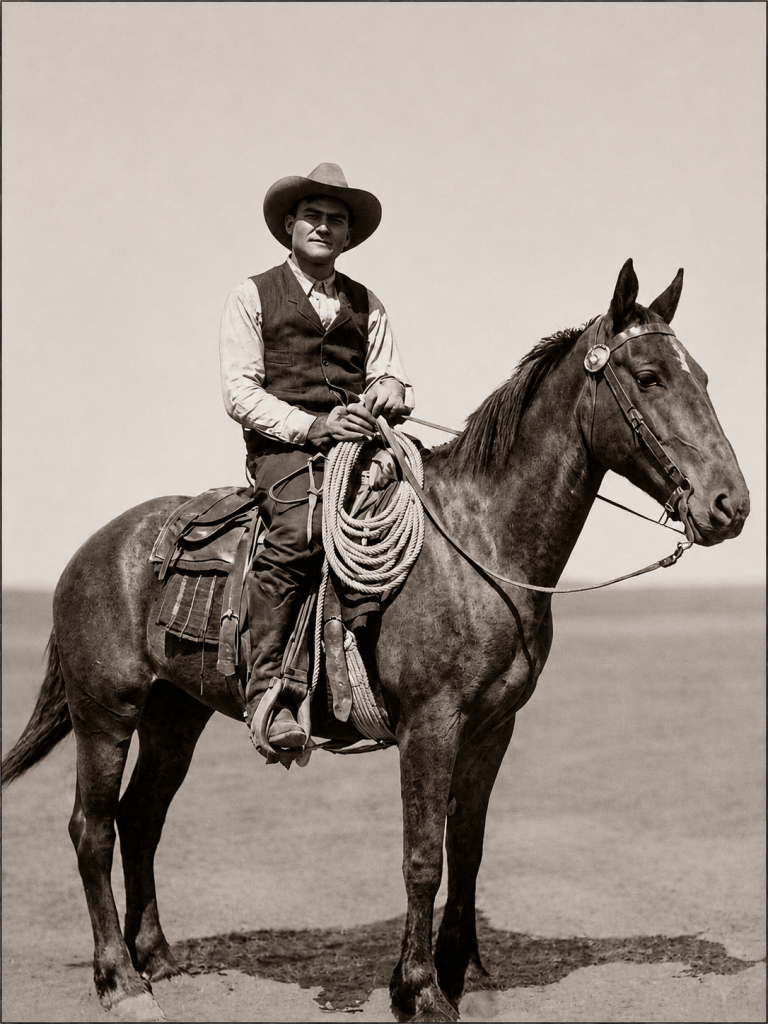
Howard Pepper 1918
The Boat
Dad had a ranch twenty miles southeast of Havre. He was born in 1898 and lived his life as if the world had stopped around 1930. Many of the following events can be attributed to that fact.
In July of 1962, Dad said we were going sturgeon fishing on the Missouri River. It was just Dad, Jack, my brother-in-law, and me. I was glad my brother, Bill, wasn’t coming. With him there, I would have been the kid, not one of the crew. Even then, I felt guilty about the thoughts. Dad had tried to catch a monster sturgeon for years and never landed one.
Dad met a fellow rancher named Al on a trip to sell cattle in Sioux City. Al said we could fish a private stretch of the river bordering his ranch. We would have it all to ourselves, and best of all, he had pulled several large sturgeon from that spot.
Dad put me on worm detail, which wasn’t a bad job if you knew where to look. Dad handed me a Folgers coffee can and told me to fill it. The small pasture where we kept the milk cows was full of dry cow patties. I flipped them over, and the worms were crawling through the dirt and pale grass underneath. In an hour, the can was full.
I took it back to the barn and set it in a cool corner of the granary to keep the worms alive until morning. The air was filled with the earthy scent of baled hay, grain, and leather. Jack, Dad, and Bill were fixing fences in the east pasture. I could have slipped off to the creek to set off the rest of my fireworks, but Dad had promised me something spectacular before dark. Instead, I killed time cleaning stalls.
They returned on schedule at noon. On our ranch, we ate breakfast, dinner, and supper, not breakfast, lunch, and dinner like they said in town.
He asked me, “Can’t’s full?”
I nodded.
He turned to Jack. “You coming to dinner?”
He shook his head. “I’ve got some things to do first.”
Jack stayed at the barn for a few minutes, messing around with his tackle. I hung around to watch. He brought out some set lines, the worms, and two buckets. We split the load and put everything in the pickup. Then we went in for a dinner of baked ham, potatoes, and corn.
After dinner, Dad, Jack, and I went to the pickup. Dad went into the barn for a few minutes. He came back to the pickup and looked in the bed. “Jack, grab another bucket.”
Jack looked puzzled, but he didn’t ask.
He always said, “My Dad was the first person who believed in me.”
He told me this story: “I came to the ranch to help with the hay. I told my mother I would work Howard into the ground. Instead, it was the other way around. By noon, I was ready to quit, and he was just starting. He didn’t give me lip, just told me to show up the next day.”
Jack tossed the bucket into the pickup. We headed south to the largest beaver dam on our property. Dad got out to survey the pond to make sure the beavers were in their den. The beaver’s pond kept water in the stream all summer, and he didn’t want to hurt his engineers.
Jack got out. He took out the set lines, the net, a bucket, and the can of worms from the pickup. He handed me the bucket, then walked up next to Dad and started baiting the hooks on the set lines.
Dad turned to look at him and asked, “What the hell are you doing?”
Jack looked astonished. “I’m baiting the hooks so we can catch some suckers for tomorrow.”
Dad said, “We don’t have all day to fish for suckers! We have another mile of fence to go.”
Dad pulled a half stick of dynamite from his overalls pocket. He prepared the fuse, holding his cigarette in one hand. Jack just stared. Dad crimped the fuse to the detonator with his teeth, put it in the dynamite, lit the fuse, and tossed it into the pond.
There was a thud. A column of water shot straight up from the pond. Dozens of stunned fish rose to the surface.
Dad said, “Fill the buckets with water so we can keep the suckers alive.”
He grabbed the net and started scooping up fish, throwing the trout back. Jack didn’t move. The promise was kept. It was spectacular!
Dad checked the dam, then we drove back to the barn, unloaded the buckets of fish, the worms, and Jack’s tackle. Dad, Jack, and Bill left for another afternoon of fencing. I stayed at the barn and played with the fish.
The night was a whirlwind of activity. Dad treated the trip like a military expedition. We packed an enormous WWII Army tent, large enough for three army cots and two large coolers—one intended for fish fillets and the other for food and beer.
Mom made ham sandwiches and potato salad, so the air was full of the scent of mustard and horseradish. Dad was outside checking off items while Jack loaded the dirty GMC four-wheel-drive pickup. I had filled my little backpack, so I was staying as small as possible to avoid being drawn into the melee. Finally, they got down to the tackle.
Dad seemed obsessed with the sinkers, having fished this spot before. He said, “Is that all the heavy sinkers we have? We’re going to lose some.”
Jack replied, “We can stop at a hardware store to get more.”
“Not a chance. Nothing will be open on the way. Go see Shorty, he’ll have some we can borrow.”
When Jack returned, Dad was finally happy with the tackle. He said, “Everyone hit the sack. We leave at two tomorrow.”
I thought, “Wow, that’s getting up three hours early.”
I woke to the smell of bacon and eggs. Bill grumbled something about having to stay behind as I left the room. We ate, then piled into the bench seat of the truck. I was the designated gear shifter, in the middle with no seatbelt. You just held on. Even with that duty and the bumpy ride of a dirt road, I was asleep in minutes.
I woke up when we stopped in Fort Benton for gas. I always loved sleeping through a trip. I didn’t have to be bored looking at the endless plains or listening to adults talk about crops or weather. I was at the ranch one minute and at the destination the next.
We went down the highway until Dad suddenly turned onto a bumpy dirt road. A recent rain had made small lakes in the ruts. Dad was excited. “This rain will make the trout come out. We can cast lines for the sturgeon, and Bob can fish along the bank.”
After two miles, we found the spot—three tall cottonwoods on the bank. We quickly set up camp, pitching the tent in the grass behind the trees. I’d never seen a river so big. It made the Milk River in Havre look like the creek at the ranch. The water ran light blue and clear while white clay banks rose across the river. They reminded me of the White Cliffs of Dover I had seen pictured in a book.
Dad said, “Hey Bob, make a fire.”
I gathered stones, setting them in a circle. I stacked kindling, then ran to Dad, asking, “Can I use your Zippo?” Once the fire was going, I got out his blackened camp percolator and put the coffee on. Jack and Dad had finished baiting the set lines, fastening large steel nuts for sinkers. They swung them out, then came over to the fire.
While they drank coffee, I rigged my fishing pole. I was told to fish downstream from the cottonwoods so our lines wouldn’t cross. My casts weren’t great, but I wasn’t after sturgeon anyhow. I was after trout and bass. I had our supper while they were finishing a second cup of coffee—a nice twelve-inch trout.
I held it up, “Look what I’ve caught while you were slacking.”
Dad glanced at it, “Nice fish, put him on the stringer.”
Jack poured out his cup and ran to the bank to rig his pole. Dad followed. While they were setting up, I caught a bass—something we never saw in our creek. I watched as they cast their lines and the weights splashed in the middle of the river where the sturgeon were.
After an hour, I heard Jack shout to Dad, “You got a big one. Don’t let him snap the line.”
I stuck the handle of my pole in the mud and rushed over. Dad’s fishing pole was nearly bent in half. He was struggling to adjust the drag on the reel so the fish could run out.
He yelled, “Jack, come over! Help me!”
Jack yelled, “Bob, grab my pole!”
I took the pole from Jack and watched as the two of them struggled with the fish. Dad had just set the drag when the fish made a hard run. The line screamed off the pole, then slowed. Dad pulled back on the pole, reeling the line in.
“Damn, it’s like pulling a truck out of mud,” he said.
I handed Jack’s rod back to him.
He called out, “Just keep him on the line. He’ll tire out before you do.”
Every time Dad made some progress, the fish made another run. His shirt was soaked in sweat, and his hands shook. The battle lasted an hour until he brought the fish onto the shore. It was a six-foot lake sturgeon. To my eyes, it was as big as a whale. I noticed Dad limping as he and Jack pulled the sturgeon closer to the camp. I thought he had twisted his ankle.
Jack said, “We should have brought a bigger scale.”
Dad replied, “I should have brought the camera.”
After they got the sturgeon next to the fire, Jack and Dad pulled the set lines in. Some big catfish were on the hooks along with suckers. We kept the catfish and put the suckers in the bait buckets.
They went back to casting. Jack hooked a big fish, but it snapped the line before he could land it. They lost weights on snags like Dad said they would. We stopped to have Mom’s sandwiches for dinner at two o’clock. Once again, I noticed his limp.
By now, Dad had settled into his chair because it was hot. His line was still in the water. The air was still—the waves of heat rose from the pickup, blurring the hills behind it. I took off my shoes and rolled up my pants so I could wade through the water to cool off.
Jack was spurred on by Dad’s sturgeon, and the heat didn’t slow him down. He even took time to have a rock skipping contest with me. We ended the day fly fishing for trout and bass, so we had enough fish for supper.
I went out to get more firewood, while they filleted the fish to pack in the cooler. I walked to a dead tree at the bottom of a hill. The grass here was brittle and brown, crunching underfoot — not like the green grass at the bank. I skirted some tumbleweeds to get at the dead limbs piled below the tree. As I was picking up branches, I heard the distinct rattle of an angry snake. My heart skipped a beat. I slowly backed away, then turned and ran back to the camp for backup.
I said, “There’s a snake by the firewood.”
Jack answered, “I’ll help you. Let’s scare that snake off!”
We went back to the tree. We found the snake by the firewood and threw small stones at it. The snake coiled—striking again and again. Finally, one of my stones struck the snake on the head.
Jack yelled, “Good shot!”
“Yes!” I exclaimed.
The snake decided we had made our point. It retreated toward a boulder on the hill. Jack and I gathered up the firewood and returned to camp.
We built a nice fire. At times, the smoke swirled around us, the smell sticking to our clothes. The sparks rose into the star-filled sky. Dad was in a great mood. Cans of beer were opened. I even got to take a sip. We sat mesmerized by the fire.
I said, “I wonder if this is how the Indians felt at night.”
Dad laughed. “I know they worshiped with tobacco.” He lit a cigarette with the end of a burning stick. “All that’s gone now, unless you go to the reservation.”
Jack stretched. “We wouldn’t be camped here if it weren’t gone.”
I said, “I was scared today when you had to sit down. I’ve never seen you limp like that.”
“I hurt my bad leg landing that fish.”
“I didn’t know you had a bad leg. I knew you had polio. Is that why it’s bad?”
“No. I was out in the west pasture riding Dusty. A snake scared him, he reared and fell on his side. He broke my leg.”
“Did you ride him home?”
“He got up and moved away. I had to whistle-call him back. I hooked my arm through the stirrup and told him to go home.
“Wow, did Mom take you to the hospital?”
“Your Mom and I weren’t married then. I crawled to the pickup and drove myself in. I was lucky it was my right leg; otherwise, I couldn’t have pushed the clutch.”
I said, “I don’t like snakes!”
“Neither do I,” Dad replied.
We waited until the flames died down, then roasted some of the trout we caught. I was in heaven! I felt grown up. I was part of the conversation with two men. After a few hours, I went to bed, making sure Dad checked the tent for snakes.
He told me, “Goodnight.”
I replied, “I love you.”
When the morning broke, I got up and left the tent. Mist rose from the water as the sun crested the bluffs to the southeast. Across the river, a small herd of deer was drinking at the bank.
Jack said, “Look, that’s a blue heron next to the deer.”
I heard the songs of meadow larks and sparrows in the trees above us. It was going to be a great day.
As the mist cleared, it was Jack’s turn to land the big one. He struggled to bring the fish in between the cottonwood trees but couldn’t do it. It fought harder than the sturgeon. It made a run east down the river. Jack followed, still trying to land it.
As Dad watched him disappear, he laughed and said, “He’ll never land that fish!”
He ended up a mile down the river before he pulled the tired fish in. Dad and I waited for his return.
I looked at Dad. “Think he landed it?”
“Don’t think so,” he replied.
We stood waiting.
Suddenly, Dad said, “Look, he’s coming back empty-handed.”
I turned and squinted as I looked down the river—I was disappointed to see him walking back without the fish or pole.
“Dad, the fish took his pole!”
Jack must have seen us staring at him because he began to shout and wave. We ran down the bank.
“I’m going to need help to bring it back.”
Dad panicked. “Is it a sturgeon?”
“No, it is the biggest catfish I have ever seen!”
It was the biggest catfish any of us had ever seen. It was five feet long and must have weighed a hundred pounds. Jack and Dad each hooked a hand into its gills to drag it back to camp. Jack spent the morning skinning and filleting it.
This was the final big fish of the trip. Dad got his sturgeon, and Jack got a monster catfish. We packed up camp in the afternoon and left for home. I stayed awake due to the excitement.
Jack said, “Nobody is going to believe how big my fish was.”
Dad sighed, “Should have brought the camera.”
I added, “And a bigger scale.”
We rode in silence for a while.
Suddenly Jack got excited, “We should come back next year with a boat!”
Dad smiled. “If we have a good crop, I just might buy a boat.”
My eyes widened. “If you get a boat, can I come?”
He smiled even more. “Sure you can come.”
When we got back, Jack and Dad told everyone who would listen to the story of the biggest fish each had ever caught. That year, we had a good harvest.
I told Bill, “I think a boat is on the horizon.”
Shorty came to visit one day and didn’t find Dad at the house, so he walked to the barn. Dad was slumped over a feed stall, grain spilled on the floor. Shorty drove his pickup into the barn, loaded Dad into the cab, and rushed him to the hospital in Havre. Mom got the call at work. She picked up Bill and me at school, then we went straight to the hospital.
The doctor told Mom, “Your husband has had a heart attack.”
Dad was in the hospital for three months. Spring turned into summer before he returned. The doctors found out he was diabetic. He came home weak and tired. The neighbors helped until he got on his feet.
He pushed himself through his chores each day, then collapsed into his armchair the moment he came in from the fields.
Mom scolded him, “It’s just too much. You need to take it easy and hire some help.”
He said, “I’m better now. I’ve got the diabetes under control. I feel like I’m fifty-five so I don’t need help.”
“Maybe so,” she replied, “but you’re still smoking. I can smell it on you!”
Bill stayed at the ranch with him during school breaks that first winter. Mom and I spent Thanksgiving and the Christmas holiday at the house we rented in town. The next year, I went to the ranch with him for Thanksgiving. A blizzard hit, and we were stranded at the ranch for the entire month of December.
The first day of the blizzard, Dad came into my bedroom. He said, “Get up, Bob, it’s bad!”
The wind howled around the house, rattling the windows in my bedroom. Dad left the room, and I jumped out of bed. The floor felt like ice. I dressed, then stumbled into the kitchen just as he came back from the front door.
He said, “Get your snowsuit on.”
I ran back to the bedroom, and he followed. After I put on the suit, he said, “You need to go out of the window, then get to the front of the house. There’s a snow drift blocking the door. You need to dig it out.”
When I was hanging from the window, he warned me, “Don’t stray from the sides of the house. You might not find your way back.” I carefully skirted the house to the front door, touching the wall all the way. Finally, I spotted the end of the shovel handle protruding from the snow and pulled it free. Despite the strong wind, I struggled to remove more snow than it blew back.
Soon, I saw light coming through the glass on the door and realized Dad was looking down at me. He pushed the door open through the remaining snow and grabbed my shoulder to pull me in.
He grabbed a coil of rope from the closet in the entryway. He tied the rope around my waist. He took me by the shoulders. “Walk out to the gate and tie this rope to the post. If you get lost, you can use the rope to find your way back. I will tie the rope off on this end.”
Once we were outside, I panicked because the storm was worse. The wind tore at my clothes, and the snot froze above my lip. I looked at him. “Dad, I’m scared. You go to the gate.”
“I know you’re scared. I am too. I have ahold of the rope. Just keep it tight. Give me two pulls when you get there, tie the rope, then follow it back. If it goes slack, I will come to you. Stay put so I can find you.”
I struggled against the wind and blowing snow. I could hardly see anything in the whiteness. I found the fence, then followed it to the gate. I tied the rope off, then gave it two tugs and followed it back. Dad clapped me on the back.
When I got back to the house, we went inside for breakfast. We took off our gloves, but kept everything else on. He went to the stove for coffee. When he returned, he had two cups. He set one in front of me.
“Drink that, son! You’re going to need it.”
“Mom won’t let me drink coffee.”
“She isn’t here.”
I felt grown up.
Soon the kitchen was filled with the smell of pancakes Dad cooked for me. He had eggs and bacon. We ate our breakfast and washed the dishes. He looked at me. “We have to tie a rope from the gate to the bunkhouse, then one from the bunkhouse to the garage.”
“Why do we need to tie one to the bunkhouse? Nobody’s there.”
“If we are blinded by a whiteout, we might need that shelter,” he replied.
I nodded my head.
Dad went to the entryway to fetch two more bundles of rope. I followed him, putting on my gloves. He glanced at me and said, “We won’t be wearing just gloves after this, so bring your leather mittens. This time, when you pull twice, I’ll come to you.”
When we stepped outside, I realized why we needed the ropes. The rope we had put up seemed to disappear into a white cloud. We followed the rope out to the gate. The bunkhouse was a dark shadow in the blizzard. I reached the bunkhouse then the garage.
When we were both inside the garage, Dad sat down. His breathing seemed heavy and strained. After a few minutes, he tried to start the pickup. It refused to start even with the engine heater on. He went over to the bench and brought back the pan we used to drain oil.
He told me, “I am going to put kerosene and oil in this pan. I need you to shove it under the engine. He gave me a piece of rolled-up paper and his lighter. “Use that to start kerosene on fire.”
“Won’t that start the pickup on fire?”
“It’s too cold. We have to get the pickup going so we can feed the cattle.”
I did what I was told, and soon the pickup started. Dad backed the pickup out of the garage while I smothered the flames, then cleaned and put the pan away. We drove down to the barn to get hay and an axe. I helped Dad load the bales by pushing them into the bed.
We drove out to the south pasture where the cattle were. As my father slowly moved the pickup, I threw out the hay. When the hay was all gone, we drove to the creek. We went to the bank where Dad chopped through the ice so the cattle could drink.
We finished the job by counting the cattle as they came to the hay to eat. We had to use the spotlight to see the whole herd through the blowing snow. We saw a cow with a frozen face.
Dad pulled a wooden mallet from under the seat. He said, “Take this and break the ice up on her face.”
I took the mallet, jumped out, and gently tapped on the ice.
“You’re going to have to hit the ice harder than that.”
I swung again, and the ice shattered. Dad climbed out, took off his gloves, and used his body heat to remove the remaining ice from her eyes and nose. The poor cow was too cold to move or object. We returned to the truck.
I asked, “Should we check the horses?”
He laughed. “Horses are smart. They stand downwind. Some cows are dumb; they stand into the wind, and their breath freezes on their face.”
“Do we have to hit them with the mallet every time?”
“Sometimes you can clear it off with just your hands,” he replied.
We drove home, parked the pickup in the garage, and followed the ropes to the house. When we got into the house, it was a few degrees above freezing even with the furnace going. I would spend the next two weeks in my snow suit.
We fed the cattle and horses for two weeks this way while the blizzard raged. Soon, I was cutting the hole at the creek. I never thought much about the danger. To me, it was an adventure with Dad.
The next summer, Jack and my sister moved to Libby, Montana. His Mom and brothers were already there. We went west for a two-week visit. Mom loved the area.
She told Dad, “I hate living in Havre. Libby has everything: mountains, woods, lakes, and rivers. With the dam coming in, they will need teachers. I think we should move here.”
I thought, “It’s the perfect place for a boat.”
In fact, she liked it so much that she made Dad look for a smaller ranch to retire to. They found one that seemed perfect with two meadows, a log house, and two barns.
They sold the Havre ranch to neighbors. Two weeks later, I got in the middle seat of the pickup to leave for Libby. When I looked into the rearview mirror, I noticed Dad wiping a tear from his face. He even stopped at the county road to look back at the buildings. He liked the Libby ranch, but he said, “It’s a gentleman’s spread—just thirty head of cattle and some hay.”
My brother and I loved the new ranch. We would hike to the top of the mountain behind the ranch. To the west, you could see the streams and valleys of the foothills from our mountain to the top of the Cabinet Mountain Wilderness Area. The forest stretched in every direction.
One day we found a small valley with a grove of old-growth trees. A small stream ran through the valley. The trees were so tall and thick that they cut out the sunlight. Nothing grew below the trees. The ground was carpeted by years of falling needles. It was eerily still.
I said to my brother, “It’s like a church or a cathedral.”
We named it Cathedral Valley.
The Libby ranch was small, but too much for Dad to handle. One day, as we were climbing aboard the bus, a teacher pulled Bill and me aside.
She said, “Your father had a stroke. Your Mom is on her way to the hospital.”
When we visited the hospital, I was shocked. The room smelled of antiseptic. His face was pale, and he had tubes running to his body. He looked small in the large hospital room. We didn’t talk to him because he was sleeping.
Mom told us, “Don’t wake him up.”
Dad was so bad that my aunt flew out from Michigan to see him one last time. She left early because Mom and she got into a fight. One of Dad’s brothers had been paralyzed by a stroke, so she did not want Dad to go through the same thing.
Mom recounted, “I said I was praying he would live. She told me I should have prayed that he’d die. I told her to get out of the room!”
Dad did not recover fully. Like his brother, he was paralyzed on the right side of his body. We spent the week before his release preparing the house. We installed handles and removed the rugs from the floor.
We drove to the hospital to pick him up. He came out in a wheelchair. He tried to speak, but the words were garbled. He waved with his left hand.
Mom said, “Get out and help him in.”
We helped him stand. His right arm hung limp.
We had to help him turn, then slowly lowered him into the seat. After a few minutes in the car, he began to slump forward. Bill leaned forward to hold his shoulders against the seat.
After we got home, Bill and I helped him into the house. When dinner came, he struggled to eat the cut-up food with his left hand.
Mom said, “I’ll feed you. You’ll get better with your left hand as time goes on.”
Later, Mom helped him in the bathroom, then to bed.
That night, he asked me for a smoke. I said, “No.”
He would ask again and again until the night he died.
Life was hard. Bill and I did our best to keep the ranch going during the morning and evening while still going to school. Mom taught school all day, then came home to take care of Dad.
After six months, the strain was wearing on everyone. One evening, she sat at the kitchen table and whispered to us, “I guess your aunt was right.”
I spent many of those days sitting in Cathedral Valley thinking of Dad when he was well. I lost myself in the dark quietness of that place. It was an escape from the hardship at home.
We finally sold the Libby ranch. That day I walked to Cathedral Valley one last time. The trees stood silent. The stream ran through the shadows. The only thing that changed was us.
My dad sat in that chair for the rest of his life.
In the end, we never got that boat.
 Pepper Pages